AU → EU · EES
EES and ETIAS for Australians: what changed in Europe
Europe's border now fingerprints and photographs most Australians on their first visit. ETIAS, the paid authorisation, has not started. Here is what applies in October 2026 and how it changes a business class itinerary.
Kaviqa5 min read
Two systems, one confusion
Travellers keep mixing up two separate EU schemes. The Entry/Exit System (EES) is a border check that records who comes and goes. It is running now. The European Travel Information and Authorisation System (ETIAS) is a paid, pre-arrival permission, similar in idea to a US ESTA. As of late October 2026 it has not started, and you cannot apply for it.
Both cover the Schengen area, which is most of continental Europe, and both apply to Australians and New Zealanders because you can enter for short stays without a visa. EES does not apply to Ireland or Cyprus, which are outside Schengen. A flight to London, then, is governed by the UK rules in our UK ETA guide and not by anything here.
What EES does at the border
EES began its phased start on 12 October 2025 and the European Commission lists it as fully operational at all external border points from 10 April 2026. It replaces passport stamping for short stays with an electronic record, and it counts your days automatically against the 90-days-in-any-180 limit.
| Stage | What to expect |
|---|---|
| First entry | Your passport details, a facial photo and fingerprints are taken at a booth or kiosk, with an officer present |
| Later entries and exits | A quick verification against the record, which is quicker than the first visit |
| How long the record lasts | Three years, or until the passport expires if that comes first, according to GOV.UK's description of the scheme |
| Cost | Free. There is nothing to do or pay before you travel, and websites claiming otherwise are scams |
| If you refuse biometrics | Officers can refuse you entry to the Schengen area |
Children aged 12 and over give fingerprints. Younger children have their photo taken. You may be asked a few questions at the booth or kiosk about your trip.
The queue problem, and what to do about it
The honest summary is that EES has slowed border control at busy airports. Airport and airline industry bodies reported waits of up to two hours at peak times in the lead-up to full operation and warned that summer queues could be worse. The Commission allowed partial suspensions of the system to manage peaks. Whether your airport is running at full speed on the day is not something you can know in advance.
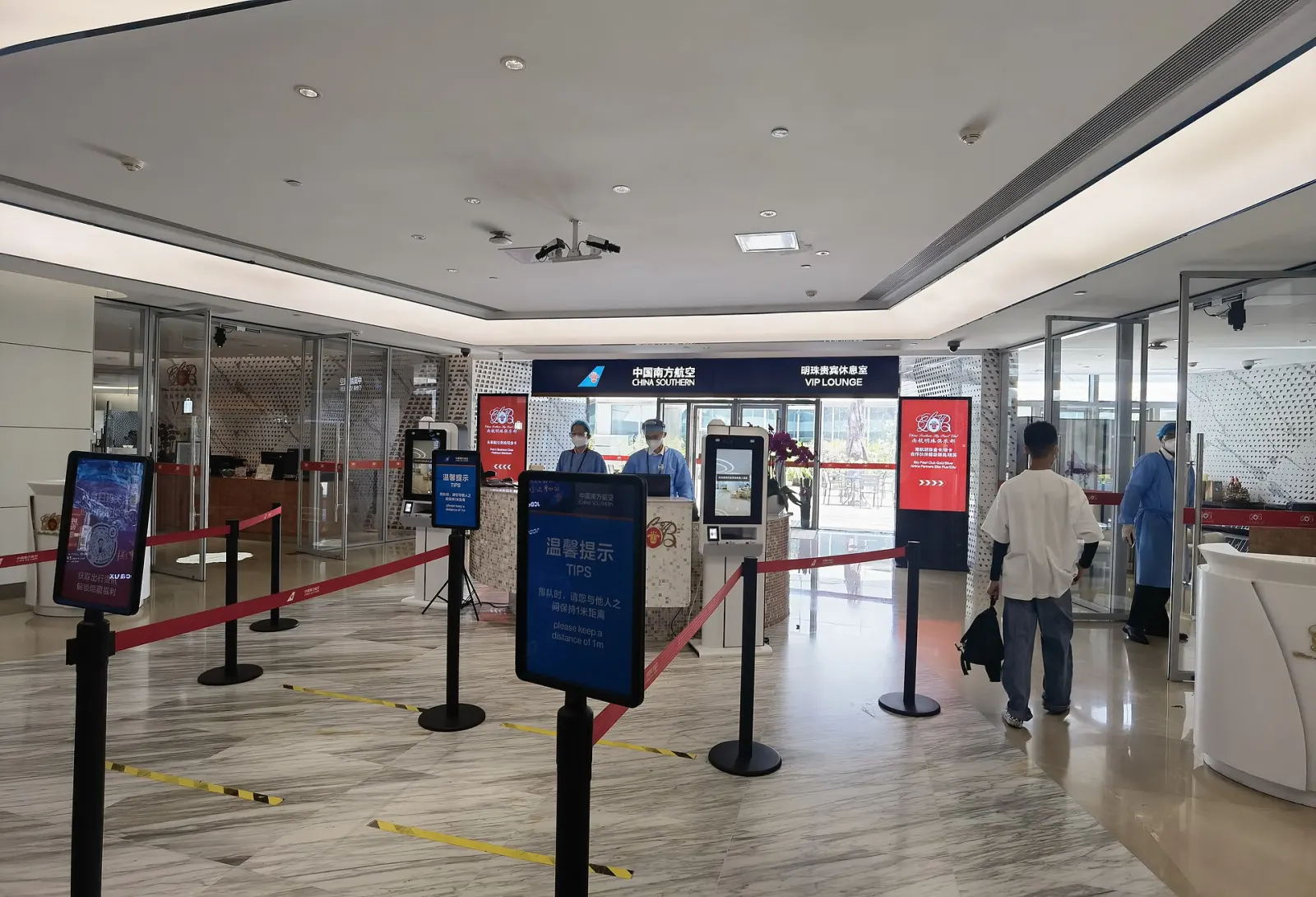
The practical fixes are small. Land with your passport and travel details to hand. Use the business class priority lane where the airport offers one, but do not count on it to bypass biometric registration. On the way home allow extra time for the exit check, because the departing record is also verified. A lounge helps if the wait lands on you; see airline lounge access.
ETIAS: where it stands
ETIAS has slipped repeatedly. Earlier EU and UK government guidance pointed to the last quarter of 2026. Reports in July 2026, citing the Financial Times, said the agency building the system now considers a 2026 launch not feasible, and that 2027 is the realistic outcome. As of late October 2026 we could not find a confirmed start date from the Commission, so treat any date quoted by a travel blog as unconfirmed.
- Cost and validity as planned: €20 per application, valid for three years or until the passport expires. These are the figures published for the scheme, and they can change before launch.
- There is nothing to apply for yet. The French government warns that no website currently issues ETIAS authorisations. Any site selling one now is a scam.
- A transitional period is planned after launch, during which entry without an ETIAS would still be allowed. The length has been reported as six months, but check the EU travel site for the final rule.
- The 90-day rule is unchanged. ETIAS is permission to travel, not a longer stay.
What it means for business class trips
For most Australians flying to Europe in business, the change is a few more minutes at the first Schengen border and a slower arrival hall in busy hours. The bigger effect is on how you build the trip. A single ticket that lands at your final Schengen destination is the easy case: you clear EES there, with no onward flight waiting.
The hard case is a self-built itinerary with an onward flight inside Europe. If you want a cheap long-haul business fare into a Schengen city and a separate ticket onwards, price in a long gap and ask whether the saving is worth it. Kaviqa labels two-ticket results and shows the wait, so you can see that trade before you book. See today's verified fares on the deals page.
This is general information, not legal advice. Entry rules are decided by each country's border officers on the day. The EU's official travel site and Smartraveller are the sources to check before you fly.
Common questions
- Do Australians need ETIAS to travel to Europe in 2026?
- Not yet. As of late October 2026 ETIAS has not launched, and you cannot apply for it. Earlier guidance pointed to late 2026, but reports in mid-2026 say 2027 is now more likely. Check the EU's official travel site for the confirmed date.
- What is the EU Entry/Exit System for Australians?
- It is an electronic border record that replaces passport stamping for short stays. On your first visit officers take your passport details, a facial photo and fingerprints. It has been fully operational at EU external borders since 10 April 2026, and registration is free.
- Does EES apply if I fly to London or Ireland?
- No. The UK is outside the EU, and Ireland and Cyprus are not in the Schengen area, so EES does not apply when you travel to them. It applies at Schengen external borders, including when you arrive from the UK by air or Eurostar.
- How much will ETIAS cost when it starts?
- The planned fee is €20, with approval valid for three years or until the passport expires. That is the published plan, not a live price, because the scheme has not started. Do not pay any website that claims to sell ETIAS now.
- Will EES make me miss my connection in Europe?
- It can if the connection is tight. You clear border control and EES at your first Schengen airport. On one ticket the airline rebooks you if you miss the next flight. On separate tickets you carry the cost, so leave generous time.